CPAP Alternatives
When CPAP does not work, it is not failure. It is information.
CPAP is effective, but it is not the only option. If you have struggled with CPAP, you deserve a clinician who will work with you to find a treatment you can actually sustain.
Why CPAP Is Challenging for Many People
CPAP (Continuous Positive Airway Pressure) is the gold standard treatment for obstructive sleep apnea. It works. When used consistently, it eliminates airway collapse, restores oxygen levels, and allows the brain to reach the deep, restorative stages of sleep it has been missing.
But there is an uncomfortable truth the sleep medicine field has been slow to confront: between 40% and 60% of patients prescribed CPAP do not use it consistently. Some abandon it within the first week. Others use it sporadically, getting partial benefit at best.
This is not a character failing.
The reasons people struggle with CPAP are real and valid: mask discomfort, air pressure that feels unnatural, claustrophobia, skin irritation, dry mouth, noise, partner disruption, and the simple difficulty of adapting to sleeping with a device attached to your face. For patients with anxiety or trauma histories, the sensation of a mask can be genuinely distressing.
An untreated patient is no better off than an undiagnosed one. If CPAP sits unused on the nightstand, we need to find something that works.
Before Giving Up on CPAP
Mask Fitting and Selection
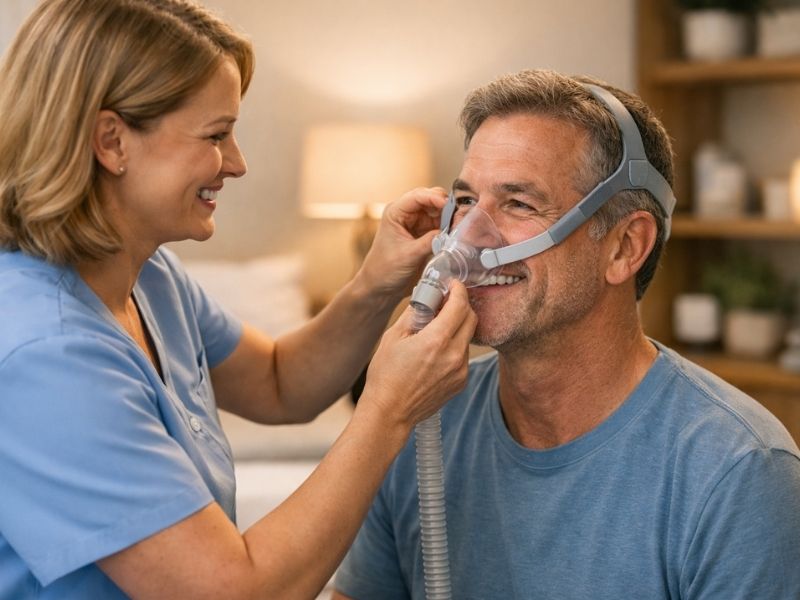
There are dozens of mask styles: nasal pillows, nasal masks, full-face masks, hybrid designs. The wrong mask is the most common reason for CPAP failure. A proper fitting session can be transformative.
Pressure Adjustment
Modern CPAP machines can auto-adjust pressure throughout the night. Ramp features allow pressure to start low and increase gradually as you fall asleep. These settings make a significant difference in comfort.
Humidification and Comfort
Heated humidification eliminates dry mouth and nasal congestion for most patients. Heated tubing prevents condensation. These additions are simple but often overlooked.
Behavioural Adaptation
Gradual desensitisation, wearing the mask while awake for short periods, and systematic acclimation protocols can help patients adjust over time.
A Trauma-Informed Approach
For patients with claustrophobia, anxiety disorders, or trauma histories, a standard CPAP introduction can feel overwhelming or even triggering. Dr. Desilva takes a trauma-informed approach to CPAP adaptation.
This means working at the patient's pace, using gradual exposure techniques, starting with the least restrictive mask options, and never dismissing the emotional response to wearing a device during sleep. Some patients need weeks of gradual acclimation. Others do better with an alternative treatment from the outset. Both paths are valid, and the goal is always effective treatment that the patient can sustain.
If you have tried CPAP and found it distressing, that experience does not close the door on treatment. It opens a conversation about what will work for you.
Alternative Treatment Options
Oral Appliance Therapy (OAT)
A custom-fitted dental device, similar in size to an orthodontic retainer, worn during sleep. It works by repositioning the lower jaw slightly forward, which opens the space behind the tongue and prevents airway collapse. Oral appliances are custom-made by a dentist trained in dental sleep medicine and adjusted over several visits to optimise effectiveness and comfort.
Best for: Patients with mild to moderate OSA, CPAP-intolerant patients, frequent travellers, and those who prefer a simpler, device-free approach to treatment.
Advantages
- Comfortable and easy to wear
- Silent; no machine noise
- Highly portable for travel
- No electricity or power source needed
- Higher long-term adherence than CPAP
- Covered by most medical insurance
Limitations
- Most effective for mild to moderate OSA
- May not sufficiently treat severe OSA
- Requires healthy teeth and jaw joints
- Possible temporary jaw stiffness
- Needs periodic adjustment over time
- Requires custom fitting by a specialist
Positional Therapy
In many patients, sleep apnea is significantly worse when sleeping on the back (supine position). Gravity pulls the tongue and soft tissue backward, narrowing the airway. Positional therapy uses wearable devices that gently encourage side sleeping through vibration or physical positioning, preventing the patient from rolling onto their back.
Best for: Patients whose sleep study shows a significant positional component (AHI at least twice as high on back vs. side). Often used in combination with oral appliance therapy or weight management.
Advantages
- Non-invasive and simple to use
- No mask, machine, or dental device
- Can be combined with other treatments
- Modern devices are small and comfortable
- Effective for position-dependent OSA
Limitations
- Only effective for supine-predominant OSA
- Not a standalone treatment for severe cases
- Some patients find devices uncomfortable
- Requires a sleep study to confirm positional component
- Long-term adherence varies
Lifestyle Modifications
Certain lifestyle factors directly influence airway collapsibility and OSA severity. While lifestyle changes alone rarely resolve moderate or severe OSA, they can meaningfully reduce severity and improve the effectiveness of other treatments.
Best for: All patients with OSA, as a complement to primary treatment. May be sufficient as standalone therapy for mild, weight-related OSA in motivated patients.
Evidence-Based Strategies
- Weight management (10% weight loss can reduce AHI by 26-32%)
- Regular exercise (improves OSA even without weight loss)
- Avoiding alcohol 3-4 hours before bed
- Stopping sedative medications when possible
- Nasal congestion management
- Sleep hygiene optimisation
Realistic Expectations
- Rarely eliminates moderate-to-severe OSA alone
- Weight loss is difficult and takes time
- Anatomical factors cannot be changed by lifestyle
- Most effective as complement to other treatments
- Results vary significantly between individuals
Inspire Therapy (Hypoglossal Nerve Stimulation)
Inspire is an FDA-approved implantable device for patients with moderate to severe OSA who cannot use CPAP. A small pulse generator, implanted under the skin of the chest, stimulates the hypoglossal nerve during sleep. This nerve controls the tongue, and stimulating it gently moves the tongue forward, keeping the airway open. The patient activates the device at bedtime with a small handheld remote and turns it off upon waking.
Best for: Patients with moderate to severe OSA (AHI 15-65) who have tried CPAP and cannot use it, meet the anatomical criteria confirmed by sleep endoscopy, and have a BMI under 40.
Advantages
- No mask, hose, or machine
- Works from inside the body
- Shown to reduce AHI by approximately 79% in studies
- High patient satisfaction and long-term adherence
- Covered by most insurance plans
Limitations
- Requires outpatient surgery for implantation
- Not suitable for all anatomies (drug-induced sleep endoscopy required)
- BMI must typically be under 40
- Not for central sleep apnea
- Battery replacement needed every 10-12 years
Finding the Right Fit
Dr. Desilva's approach starts with understanding the full picture: the severity of your OSA, your anatomy, your lifestyle, your previous experiences with treatment, and what matters most to you. From there, a treatment plan is built around what you can realistically sustain, not what looks best on paper.
For patients who have struggled with CPAP, the first step is usually a detailed review of what was tried and what went wrong. Many CPAP problems have solutions that were never explored. When CPAP truly is not the right fit, alternative options are discussed openly, with an honest assessment of what each one can and cannot do for your specific situation.
The goal is simple: effective treatment that you can live with. Whether that means a well-fitted CPAP, an oral appliance, a combination approach, or a referral for Inspire therapy, every option is on the table.
Ready to Find a Treatment That Works for You?
If you've struggled with CPAP or want to explore your options, a conversation is a good starting point. We'll review your situation, discuss what's realistic, and build a plan together.
Prefer to talk? Call (888) 886-2126