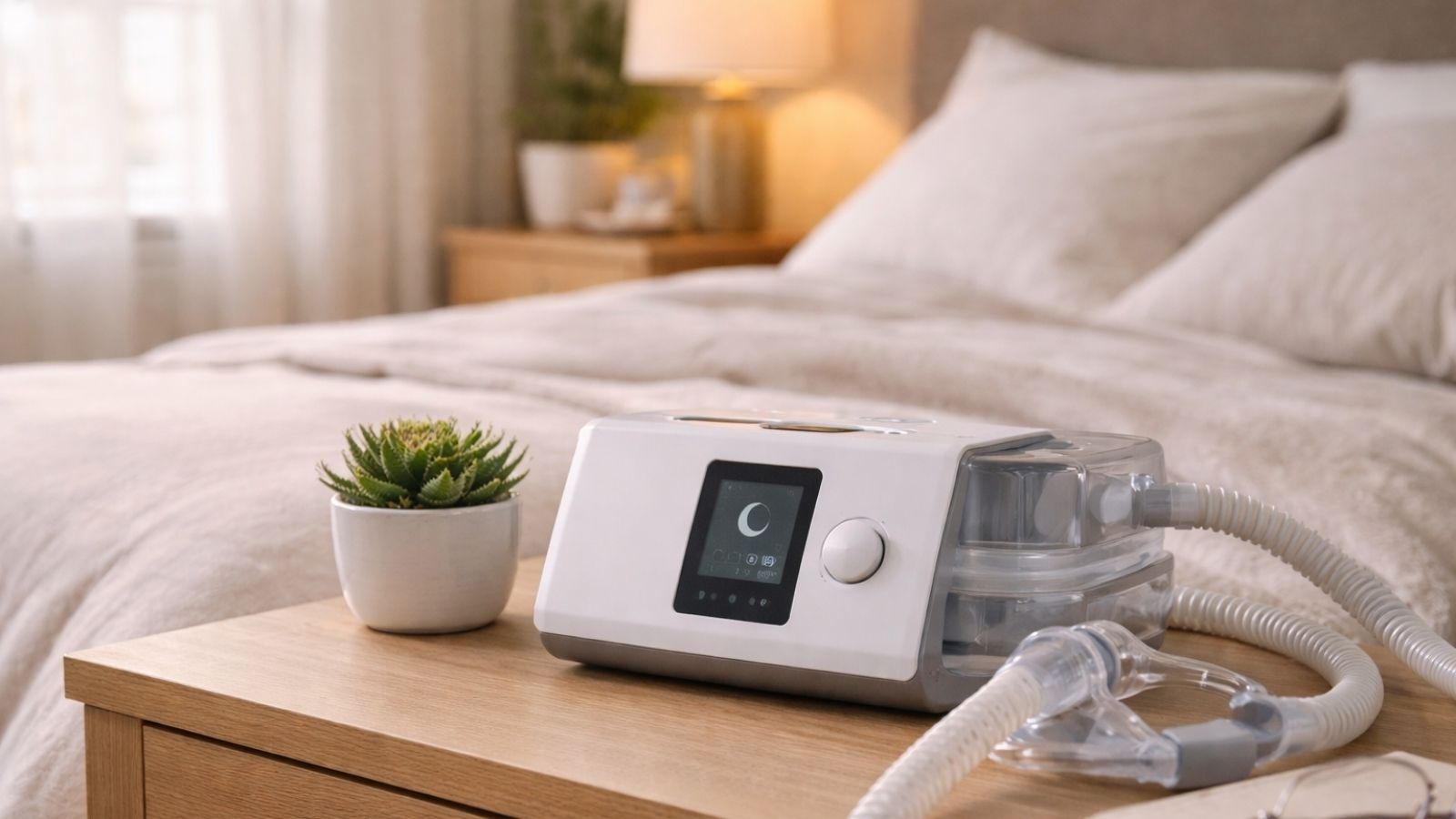
Can I Be Diagnosed With Sleep Apnea From Home? Telehealth, Home Sleep Tests, and When a Lab Study Is Needed
.jpg?dpl=dpl_2rbzr4Leuvt5PZSHajaHsnCjJENu) Dr. Bertrand R. DesilvaMD, FCCP, DABSM7 min read
Dr. Bertrand R. DesilvaMD, FCCP, DABSM7 min read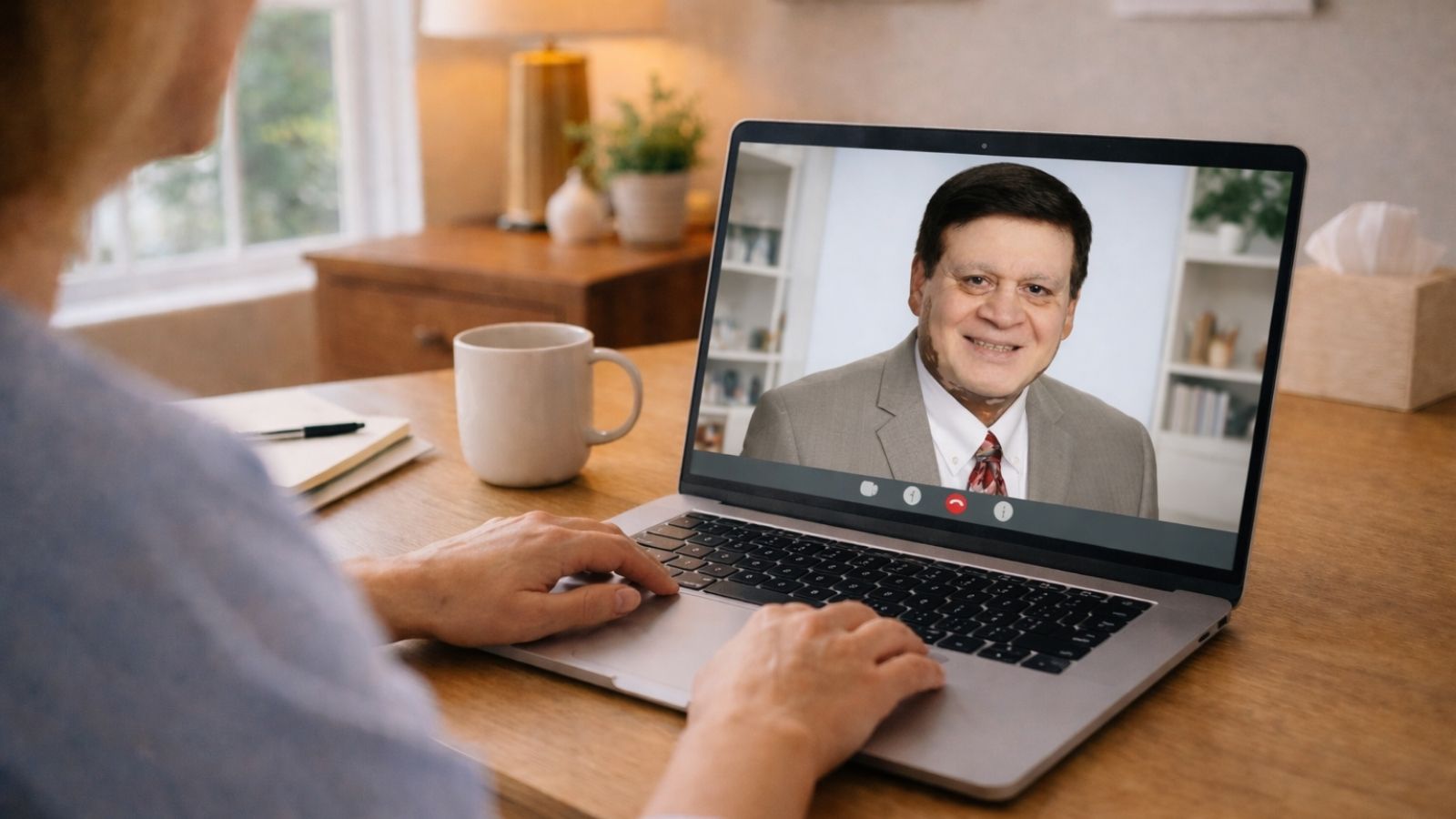
Many patients delay sleep apnea care because they assume the process will be inconvenient.
They picture driving to a sleep lab, spending the night away from home, sleeping with wires everywhere, waiting weeks for results, and then being handed a machine with little explanation.
That can happen in some cases. But it is not the only path.
For many patients, the evaluation can begin from home through telehealth. If appropriate, testing can also be done at home with a home sleep apnea test. The key is knowing when home-based care is appropriate and when a more detailed in-lab study is needed.
In our practice, the goal is not to make testing complicated. The goal is to make it accurate.
Telehealth Can Be a Strong Starting Point
A sleep apnea evaluation does not begin with the device. It begins with the conversation.
Through telehealth, we can review symptoms, sleep patterns, medical history, medications, risk factors, prior sleep studies, CPAP history, and treatment goals. We can discuss snoring, witnessed breathing pauses, morning headaches, fatigue, insomnia, blood pressure, weight changes, nasal breathing, jaw anatomy, and the way poor sleep affects daily life.
Our telehealth consultation process is designed for initial evaluations, follow-up appointments, treatment plan discussions, and CPAP compliance check-ins. Patients complete intake forms before the visit, join by secure video, and receive a plan that may include sleep study orders, prescriptions, or next treatment steps.
This is useful because many parts of sleep medicine depend on careful history, interpretation, education, and follow-up — not just physical location.
What a Home Sleep Test Measures
A home sleep test is a diagnostic tool used to evaluate suspected obstructive sleep apnea in selected patients.
Home tests typically measure breathing patterns, oxygen levels, heart rate, and body position. They are designed to be used in your own bed, usually for one or two nights.
Our sleep study page explains that home sleep tests allow patients to sleep in their normal environment while the device records breathing, oxygen levels, heart rate, and body position.
For many patients with straightforward suspected obstructive sleep apnea, this can be an appropriate starting point.
What a Home Sleep Test Does Not Measure
A home sleep test is not the same as a full in-lab sleep study.
Most home tests do not measure brain waves, detailed sleep stages, leg movements, or the full range of sleep disruptions that may explain fatigue, insomnia, or non-restorative sleep. A home test may also be less useful when another sleep disorder is suspected.
That is why a home test should be ordered after an evaluation, not purchased randomly and interpreted without context.
Sleep apnea testing should answer the right clinical question. If the question is, "Does this patient likely have obstructive sleep apnea?" a home test may be enough. If the question is, "Why is this patient exhausted despite a prior negative test?" or "Is there central sleep apnea, complex apnea, limb movement disorder, narcolepsy, or another issue?" then in-lab testing may be more appropriate.
When an In-Lab Sleep Study Is Needed
An in-lab sleep study, or polysomnography, provides more detailed information. It is performed in a monitored sleep lab and can measure brain activity, sleep stages, breathing, oxygen, heart rhythm, limb movements, and other signals.
Our practice considers in-lab testing when home sleep test results are inconclusive, when central or complex sleep apnea is suspected, when significant medical conditions are present, or when more detailed information is needed.
The American Academy of Sleep Medicine guideline summary also states that if a single home sleep apnea test is negative, inconclusive, or technically inadequate, polysomnography should be performed when clinical suspicion for obstructive sleep apnea remains. (American Academy of Sleep Medicine)
That means a negative home test does not always end the evaluation.
The Biggest Mistake: Testing Without Interpretation
Testing is not the same as diagnosis.
A sleep report has to be interpreted in the context of the patient. We look at AHI, oxygen levels, body position, recording time, signal quality, symptoms, comorbidities, and whether the results match the story.
A patient with a borderline test and severe symptoms may need a different next step than a patient with mild symptoms and clear obstructive findings. A patient with heart disease, chronic lung disease, neurologic disease, or suspected central apnea may need a different pathway than someone with uncomplicated obstructive sleep apnea.
Our diagnostic approach includes symptom review, medical history, comorbidity assessment, and airway/anatomical evaluation before deciding what test and treatment make sense.
The device gives data. The physician has to interpret what the data means.
What Happens After the Test?
After the sleep study, the next step is a results review.
This should not be a rushed message that says, "You have sleep apnea. Here is a machine."
A good results visit should explain what was measured, what the numbers mean, whether the findings match your symptoms, what type of sleep apnea was found, how severe it is, whether oxygen levels dropped, and what treatment options are medically reasonable.
Treatment may include CPAP or APAP, oral appliance therapy, positional therapy, lifestyle changes, additional testing, or another plan depending on the case. NHLBI describes sleep apnea treatments including positive airway pressure, oral devices, healthy lifestyle changes, mouth and facial muscle therapy, medicines for selected patients, and surgical options. (NHLBI)
The right treatment is the one that fits both the condition and the patient.
Can Follow-Up Be Done Through Telehealth?
Often, yes.
Follow-up care can include reviewing CPAP usage, mask leaks, residual apnea events, symptoms, treatment comfort, and whether changes are needed. Our follow-up care model includes regular monitoring, data-driven adjustments, proactive outreach when problems appear, and coordination with other clinicians when needed.
This matters because sleep apnea treatment is not "set it and forget it." Weight changes, aging, medications, health changes, mask fit, pressure needs, and symptoms can all change over time.
NHLBI also notes that patients diagnosed with sleep apnea need regular checkups to make sure treatment is working and may need repeat sleep studies, especially after significant weight gain or loss. (NHLBI)
The Bottom Line
Yes, many patients can begin sleep apnea evaluation from home.
A telehealth sleep consultation can identify symptoms, risk factors, medical concerns, and the right testing path. A home sleep test may be appropriate for many patients with suspected obstructive sleep apnea. An in-lab study may be needed when the case is more complex or when a home test is negative, inconclusive, or does not match the symptoms.
The best care is not defined by whether the test happens at home or in a lab. It is defined by whether the right test is chosen, the results are interpreted correctly, and the treatment plan is followed over time.
Our practice can help you start with a thoughtful evaluation and determine whether home testing, in-lab testing, or another next step is right for you.
Meet Your Sleep Specialist
Dr. Bertrand R. Desilva, MD, FCCP, DABSM
Board-certified sleep medicine specialist with 35+ years of clinical experience. Education-first, patient-centered care that takes the time to get it right.
About Dr. Desilva