Can Sleep Apnea Go Away With Weight Loss? What Lifestyle Changes Can and Cannot Do
.jpg?dpl=dpl_2rbzr4Leuvt5PZSHajaHsnCjJENu) Dr. Bertrand R. DesilvaMD, FCCP, DABSM6 min read
Dr. Bertrand R. DesilvaMD, FCCP, DABSM6 min read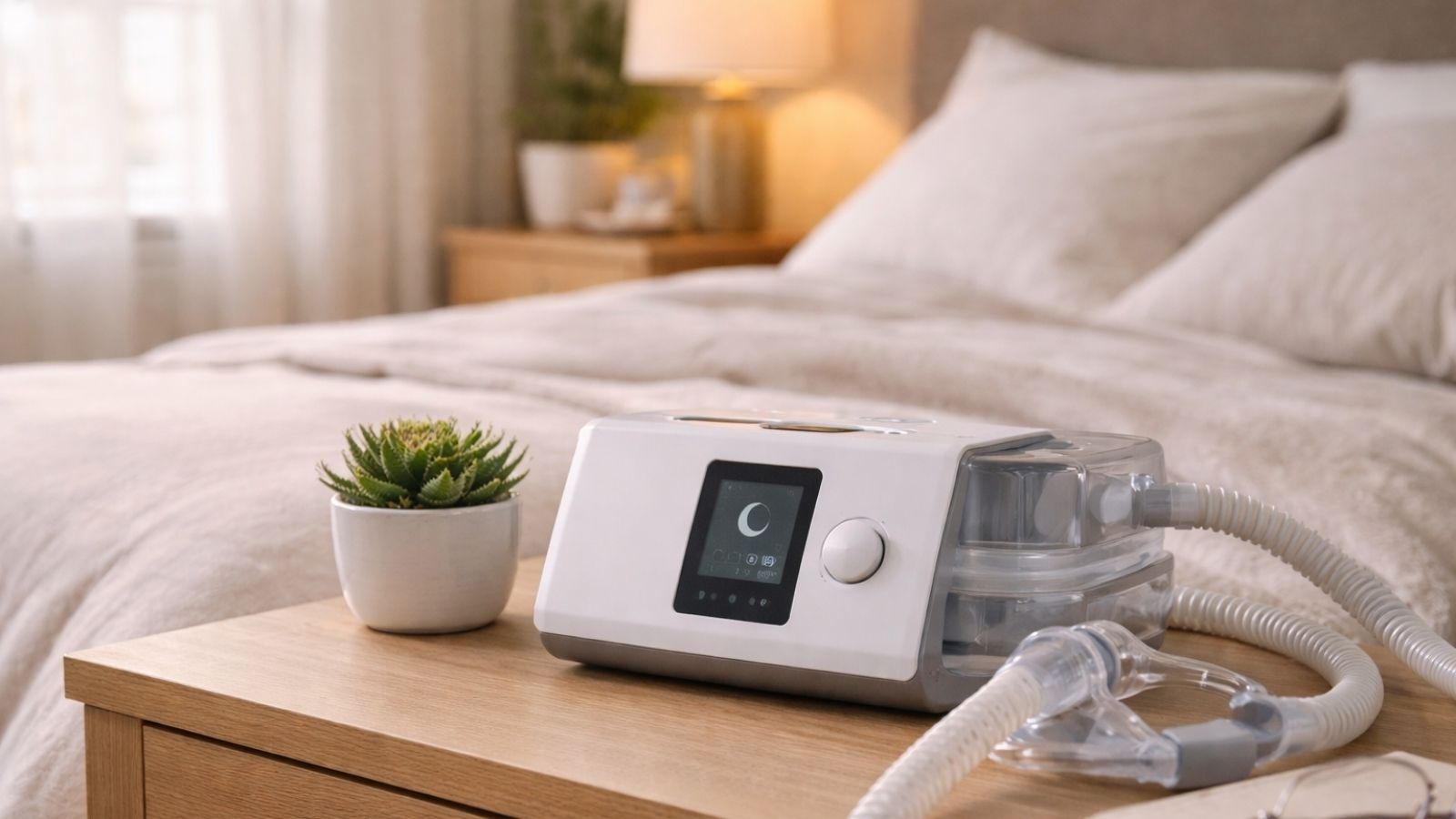
Weight and sleep apnea are connected.
But they are not the same thing.
Some patients improve significantly after losing weight. Some need lower CPAP pressure. Some have fewer breathing events. Some sleep better. But weight loss does not automatically eliminate sleep apnea, and it should not be used as a reason to stop treatment without follow-up testing.
In our practice, we take a practical view: lifestyle changes can be very helpful, but sleep apnea still needs to be measured, treated, and monitored.
Weight Can Contribute to Sleep Apnea
Obstructive sleep apnea occurs when the upper airway repeatedly narrows or collapses during sleep. Weight can contribute by increasing tissue around the neck and airway, increasing airway collapsibility, or worsening inflammation and breathing mechanics.
NHLBI explains that obstructive sleep apnea happens when the upper airway becomes blocked many times during sleep, reducing or stopping airflow, and that factors such as obesity, large tonsils, or hormone changes can narrow the airway. (NHLBI)
So yes, for some patients, weight is an important driver.
But it is not the only driver.
Thin People Can Have Sleep Apnea Too
This is where many patients get misled.
Sleep apnea can occur in people who are not overweight. Jaw structure, tongue position, nasal obstruction, airway anatomy, menopause, medications, alcohol use, family history, and sleeping position can all contribute.
A patient can be thin and still have significant obstructive sleep apnea. A patient can lose weight and still have airway anatomy that collapses during sleep.
That is why we do not use appearance alone to decide whether someone has sleep apnea. We use symptoms, risk factors, physical/anatomical assessment, and sleep testing.
Mayo Clinic lists excess weight as an important risk factor, but also identifies other risk factors such as older age, male sex, family history, narrowed airway anatomy, smoking, nasal congestion, and medical conditions. (Mayo Clinic)
The question is not, "Do I look like someone with sleep apnea?" The question is, "What happens to my breathing when I sleep?"
Weight Loss May Improve Sleep Apnea
For patients whose sleep apnea is weight-related, weight loss can help.
NHLBI notes that healthy lifestyle changes can be effective in treating sleep apnea and may include regular physical activity, healthy sleep habits, healthy weight, limiting alcohol and caffeine, quitting smoking, and sleeping on the side instead of the back when recommended. (NHLBI)
NHLBI-supported research also found that weight loss reduced sleep apnea better than a diabetes education program in a population with obesity and type 2 diabetes. (NHLBI)
So the answer is not "weight does not matter." It often does.
The more accurate answer is: weight loss may reduce sleep apnea severity, but the amount of improvement varies by patient.
Lifestyle Changes Should Support Treatment, Not Replace It Prematurely
Lifestyle changes are valuable. But they should not be used as an excuse to ignore diagnosed sleep apnea.
If you have moderate or severe sleep apnea, low oxygen levels, severe daytime sleepiness, high blood pressure, atrial fibrillation, or other medical risks, waiting months or years to see whether lifestyle changes are enough may leave the condition untreated.
NHLBI describes positive airway pressure as the most common treatment for sleep apnea and explains that PAP machines help keep the airway open during sleep. It also notes that PAP often works best when paired with healthy lifestyle changes. (NHLBI)
That is the right framing. Treatment and lifestyle do not have to compete. They can work together.
Alcohol, Sleeping Position, and Nasal Breathing Matter Too
Weight is not the only lifestyle factor that can affect sleep apnea.
Alcohol can relax airway muscles and worsen obstruction in some patients. Sleeping on the back can worsen apnea for people with positional sleep apnea. Nasal congestion can make breathing more difficult and increase mouth breathing. Poor sleep habits can worsen fatigue even when apnea is being treated.
NHLBI includes limiting alcohol and caffeine, maintaining healthy sleep habits, and side-sleeping when recommended among healthy lifestyle changes that may help sleep apnea. (NHLBI)
Mayo Clinic also advises avoiding alcohol and certain sedating medications because they can worsen obstructive sleep apnea and sleepiness, and notes that sleeping on the side or stomach rather than the back may help some patients. (Mayo Clinic)
These changes may not replace medical treatment, but they can improve the overall plan.
Do Not Stop CPAP Just Because You Lost Weight
This is one of the most important safety points.
If you lose weight and feel better, that is encouraging. But it does not prove that sleep apnea is gone. Snoring may improve while apnea remains. Daytime energy may improve while oxygen still drops. CPAP pressure needs may change, but that does not mean therapy should be stopped.
NHLBI notes that people diagnosed with sleep apnea need regular checkups to ensure treatment is working and may need repeat sleep studies, especially after gaining or losing a lot of weight. (NHLBI)
That is the correct path: reassess, measure, then adjust.
If weight loss has changed your symptoms, we may need to review CPAP data, adjust pressure settings, consider repeat testing, or re-evaluate treatment options. The decision should be based on evidence, not assumption.
What If Medication or Surgery Causes Weight Loss?
The same principle applies.
Whether weight loss happens through lifestyle changes, anti-obesity medication, bariatric surgery, or another medically supervised approach, sleep apnea should still be monitored.
NHLBI now notes that the FDA has approved a weight-loss medication for people with moderate to severe sleep apnea and obesity, used with physical activity and healthy eating, while also cautioning that the medication may have serious side effects in some cases. (NHLBI)
That development does not eliminate the need for sleep testing or follow-up. It makes careful monitoring more important.
If sleep apnea improves, treatment may change. If it does not fully resolve, treatment still matters.
What a Responsible Reassessment Looks Like
A responsible reassessment may include:
- Reviewing current symptoms
- Checking CPAP usage, leak, and residual AHI
- Reviewing weight change and medication changes
- Checking blood pressure and other medical risks
- Considering repeat sleep testing
- Evaluating whether CPAP pressure should be adjusted
- Discussing oral appliance therapy or other options if appropriate
Our follow-up care model is designed around ongoing monitoring, treatment optimization, and adjustments when weight, aging, medications, or other health changes affect treatment needs.
Sleep apnea care should evolve as the patient changes.
The Bottom Line
Weight loss can improve sleep apnea in some patients. Healthy habits matter. Exercise, healthy weight, alcohol reduction, side-sleeping when appropriate, nasal breathing support, and better sleep routines can all help.
But weight loss is not a guaranteed cure.
Sleep apnea is a breathing disorder with multiple possible contributors, including anatomy, airway structure, hormones, medical history, and sleep position. The only way to know whether it has improved enough to change treatment is to reassess with objective data.
If you have lost weight, changed medications, started a new treatment, or feel that your sleep apnea may be different now, our practice can help review your data and determine whether repeat testing or treatment adjustment is appropriate.
Meet Your Sleep Specialist
Dr. Bertrand R. Desilva, MD, FCCP, DABSM
Board-certified sleep medicine specialist with 35+ years of clinical experience. Education-first, patient-centered care that takes the time to get it right.
About Dr. Desilva