How Do I Know If My CPAP Is Actually Working? AHI, Leaks, Usage, and Symptoms Explained
.jpg?dpl=dpl_2rbzr4Leuvt5PZSHajaHsnCjJENu) Dr. Bertrand R. DesilvaMD, FCCP, DABSM7 min read
Dr. Bertrand R. DesilvaMD, FCCP, DABSM7 min read
Using CPAP is not the same as being well treated.
A patient can wear the mask every night and still have problems: mask leaks, residual apnea events, pressure intolerance, dry mouth, fragmented sleep, or persistent fatigue. Another patient may feel better quickly but still need data review to confirm that treatment is working objectively.
That is why CPAP follow-up matters.
In our practice, we do not consider CPAP successful just because a machine was prescribed. We want to know whether it is being used, whether it is controlling the apnea, whether the mask is leaking, whether symptoms are improving, and whether the patient can sustain treatment long term.
The Four Questions That Matter
When reviewing CPAP effectiveness, we usually want to answer four core questions:
- Are you using it consistently?
- Is it reducing breathing events?
- Is the mask leaking?
- Do you actually feel better?
All four matter.
A CPAP report that looks good but a patient who still feels terrible deserves attention. A patient who feels better but has high leak rates or persistent residual events still needs review. Data and symptoms should be interpreted together.
The American Academy of Sleep Medicine's positive airway pressure guideline states that PAP treatment should be based on an objective sleep apnea diagnosis and that adequate follow-up should include troubleshooting plus monitoring of objective efficacy and usage data. (American Academy of Sleep Medicine)
That is the standard we follow.
CPAP Usage: Are You Wearing It Enough?
The first question is simple: how often and how long are you using the device?
CPAP generally works only while you are wearing it. If you remove it after two hours, leave it off during naps, or skip weekends, untreated apnea may still be happening for a meaningful part of your sleep.
NHLBI advises using a PAP machine for all sleep, including naps, and bringing the device when traveling. (NHLBI)
This is why we ask about real-life patterns, not just averages. Some patients technically meet minimum usage requirements but still remove the mask in the second half of the night, when REM sleep and back-sleeping may make apnea worse.
The report matters, but so does the story.
Residual AHI: Are Breathing Events Still Happening?
AHI stands for apnea-hypopnea index. It estimates how many breathing interruptions occur per hour.
CPAP machines often report a residual AHI, meaning the estimated number of events still occurring while using therapy. A lower residual AHI is generally better, but the number has to be interpreted carefully.
A high residual AHI may mean the pressure is too low, leaks are interfering with treatment, the mask is not appropriate, events are being misclassified, or a different type of sleep-disordered breathing may be present.
A low residual AHI is reassuring, but it does not automatically explain everything. If you still wake up exhausted, we need to consider mask leaks, sleep duration, insomnia, medications, limb movements, circadian rhythm problems, depression, pain, other medical conditions, or whether the machine data is missing something.
In our follow-up care program, we monitor CPAP usage data, mask leak rates, and residual apnea events to help determine whether treatment is working as it should.
Mask Leaks: The Hidden CPAP Problem
Mask leaks can quietly undermine treatment.
Leaks can wake you up, dry your mouth, irritate your eyes, disturb your partner, and prevent the machine from delivering or measuring pressure properly. Some leaks happen because the mask is too loose. Others happen because it is too tight, worn out, the wrong style, or displaced by side sleeping.
NHLBI recommends adjusting the mask while lying down with the machine on and contacting a provider if the mask does not stay on, does not fit well, or leaks air. (NHLBI)
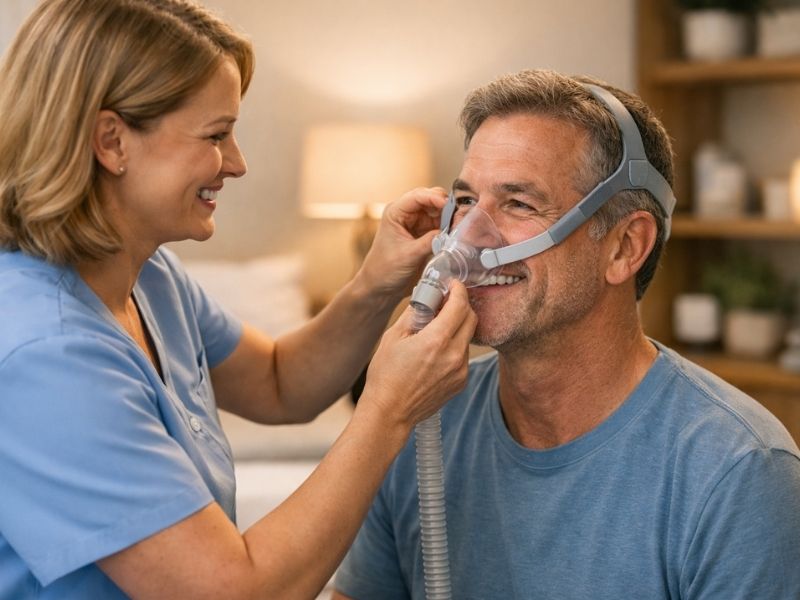
Our CPAP management program emphasizes proper fitting because mask problems are one of the most common reasons people abandon therapy. We use mask fitting, test-drive sessions, teaching classes, troubleshooting support, and ongoing care because small comfort problems can become treatment-ending problems if ignored.
Symptoms: Do You Feel Better?
CPAP data is important, but the patient still matters.
We want to know:
- Are you waking up more refreshed?
- Are morning headaches improving?
- Is daytime sleepiness better?
- Is concentration improving?
- Is your partner noticing less snoring or gasping?
- Are you waking up less often?
- Is blood pressure improving or becoming easier to manage?
- Are you more alert while driving?
The American Heart Association lists daytime sleepiness, morning headaches, memory and concentration problems, mood changes, anxiety, and depression among sleep apnea symptoms. (American Heart Association)
If those symptoms persist despite CPAP use, we should not dismiss them. We should investigate.
Pressure Settings May Need Adjustment
CPAP treatment is not always perfect from the first setting.
Pressure needs may change with weight change, aging, alcohol use, nasal congestion, medications, sleep position, altitude, or disease progression. Some patients need APAP. Others need pressure relief settings, a different mask, humidification, or additional evaluation.
The AASM guideline recommends CPAP or APAP for ongoing treatment in adults with obstructive sleep apnea and also recommends educational interventions when PAP therapy begins. It also suggests behavioral and troubleshooting interventions and telemonitoring-guided interventions during the initial treatment period. (American Academy of Sleep Medicine)
That supports what we see clinically: CPAP works best when it is managed, not just prescribed.
When to Request a CPAP Review
You should request a CPAP review if:
- You still feel tired despite using it
- Your partner still notices snoring or breathing pauses
- You wake up with dry mouth or headaches
- You remove the mask without realizing it
- You feel air blowing into your eyes
- You feel bloated or uncomfortable
- Your mask causes skin irritation
- You feel claustrophobic or anxious
- Your machine reports high leak or high AHI
- You gained or lost significant weight
- Your medications or health conditions changed
- You are traveling and your treatment feels different
NHLBI notes that patients diagnosed with sleep apnea need regular checkups to make sure treatment is working and may need repeat sleep studies, especially after major weight gain or loss. (NHLBI)
Do not wait until you quit. A problem caught early is easier to fix.
The Bottom Line
CPAP is not a "set it and forget it" treatment.
To know whether it is working, we need to review usage, residual AHI, leak rates, pressure comfort, sleep quality, and symptoms. We also need to adjust the plan when the data or the patient tells us something is not right.
If you have a CPAP machine but still feel tired, uncomfortable, or unsure whether it is helping, our practice can review your data, troubleshoot the problems, and help determine whether your treatment needs adjustment.
Meet Your Sleep Specialist
Dr. Bertrand R. Desilva, MD, FCCP, DABSM
Board-certified sleep medicine specialist with 35+ years of clinical experience. Education-first, patient-centered care that takes the time to get it right.
About Dr. Desilva