Is Snoring Always Sleep Apnea? When Snoring Needs a Sleep Evaluation
.jpg?dpl=dpl_2rbzr4Leuvt5PZSHajaHsnCjJENu) Dr. Bertrand R. DesilvaMD, FCCP, DABSM6 min read
Dr. Bertrand R. DesilvaMD, FCCP, DABSM6 min read
Snoring is easy to dismiss.
Many people treat it as an annoyance, a relationship issue, or something that "just happens" with age. A spouse complains. Someone moves to another bedroom. The person snoring jokes about it, buys nasal strips, changes pillows, or tries sleeping on their side.
Sometimes snoring is harmless.
But sometimes snoring is the sound of a breathing problem that deserves medical attention.
The important question is not simply, "Do I snore?" The better question is: "Is my snoring connected to disrupted breathing, poor oxygen levels, fragmented sleep, or daytime symptoms?"
That is where a proper sleep evaluation matters.
Snoring and Sleep Apnea Are Related, But Not the Same
Snoring happens when airflow causes tissues in the throat or airway to vibrate during sleep. It can happen for many reasons: nasal congestion, allergies, alcohol use, sleeping on your back, anatomy, weight changes, or airway narrowing.
Obstructive sleep apnea is different. In obstructive sleep apnea, the airway repeatedly narrows or collapses during sleep. Breathing becomes reduced or temporarily blocked. The brain reacts by briefly waking the body enough to reopen the airway. This cycle can happen many times through the night.
NHLBI describes sleep apnea as a condition where breathing stops and restarts many times during sleep, which can prevent the body from getting enough oxygen. NHLBI also notes that snoring or gasping during sleep should prompt a conversation with a healthcare provider, especially when poor sleep quality or excessive daytime sleepiness is present. (NHLBI)
So no, not everyone who snores has sleep apnea. But loud, disruptive, irregular, or worsening snoring should not be ignored.
When Snoring Becomes More Concerning
Snoring is more concerning when it is paired with symptoms that suggest interrupted breathing or poor-quality sleep.
The red flags include:
- Loud snoring that disrupts another person's sleep
- Pauses in breathing witnessed by a partner
- Gasping, choking, or snorting during sleep
- Morning headaches
- Dry mouth or sore throat on waking
- Daytime sleepiness
- Brain fog or trouble concentrating
- Mood changes or irritability
- High blood pressure
- Waking up frequently at night
- Falling asleep unintentionally during the day
Mayo Clinic notes that snoring does not always indicate a serious condition and not everyone who snores has obstructive sleep apnea. But it also recommends medical evaluation when snoring is loud, interrupted by silence, or associated with gasping, choking, breathing pauses, or excessive daytime drowsiness. (Mayo Clinic)
That distinction is important. The goal is not to frighten every person who snores. The goal is to identify the people whose snoring is part of a larger pattern.
Your Partner May Notice the Most Important Clues
Many patients do not know what happens when they sleep.
You may not know that your breathing pauses. You may not know that you gasp. You may not know that your snoring becomes louder when you sleep on your back or after alcohol. You may not remember waking up repeatedly.
A bed partner often notices the clues first.
In our evaluations, we pay attention to what the patient experiences and what the partner reports. Both matter. A patient may say, "I sleep through the night," while a partner says, "You stop breathing and then gasp." That is not a minor detail. That is clinically useful information.
The American Heart Association lists irregular breathing during sleep, loud snoring or gasping, excessive daytime sleepiness, morning headaches, memory and concentration problems, mood changes, anxiety, and depression among sleep apnea symptoms. (American Heart Association)
If someone close to you is worried about your breathing at night, take that seriously.
Why Snoring Remedies Can Miss the Point
Many people try over-the-counter snoring fixes before seeing a sleep physician.
That may include nasal strips, mouth tape, chin straps, special pillows, sprays, essential oils, or generic mouthguards.
Some of these may reduce noise in selected cases. But reducing noise is not the same as treating sleep apnea. A quieter night does not automatically mean the airway is staying open, oxygen levels are stable, or sleep is restored.
This is especially important with mouth tape or generic oral devices. If sleep apnea is present, the priority is not to cover up the symptom. The priority is to diagnose the breathing disorder and choose a treatment that is medically appropriate.
In our practice, we want to know what is actually happening during sleep before recommending treatment. That may mean a home sleep test or an in-lab sleep study depending on your symptoms, medical history, and risk factors.
What a Sleep Evaluation Looks For
A proper sleep apnea evaluation is not a rushed checklist.
We look at your symptoms, sleep schedule, medical history, medications, nasal breathing, airway anatomy, jaw structure, blood pressure, weight changes, fatigue pattern, and whether another condition may be contributing.
Our sleep apnea diagnosis process is built around a detailed symptom review, medical history, comorbidity assessment, and physical/anatomical evaluation. We also consider conditions commonly linked with sleep apnea, including hypertension, atrial fibrillation, diabetes, depression, metabolic syndrome, and stroke risk.
From there, we determine whether sleep testing is appropriate.
Home Sleep Test or In-Lab Study?
Many patients with suspected obstructive sleep apnea can start with a home sleep test. A home test allows you to sleep in your own bed while the device records breathing, oxygen, heart rate, and body position.
In-lab testing may be needed when the situation is more complex. That can include suspected central or complex sleep apnea, inconclusive home testing, significant medical conditions, or the need for more detailed data such as sleep stages, brain waves, leg movements, and full breathing patterns. Our sleep study page explains that home sleep tests are often ideal for suspected obstructive sleep apnea, while in-lab studies provide more extensive information when needed.
The right test depends on the patient. We do not treat testing as one-size-fits-all.
What Happens If It Is Sleep Apnea?
If testing confirms sleep apnea, the next step is choosing the right treatment.
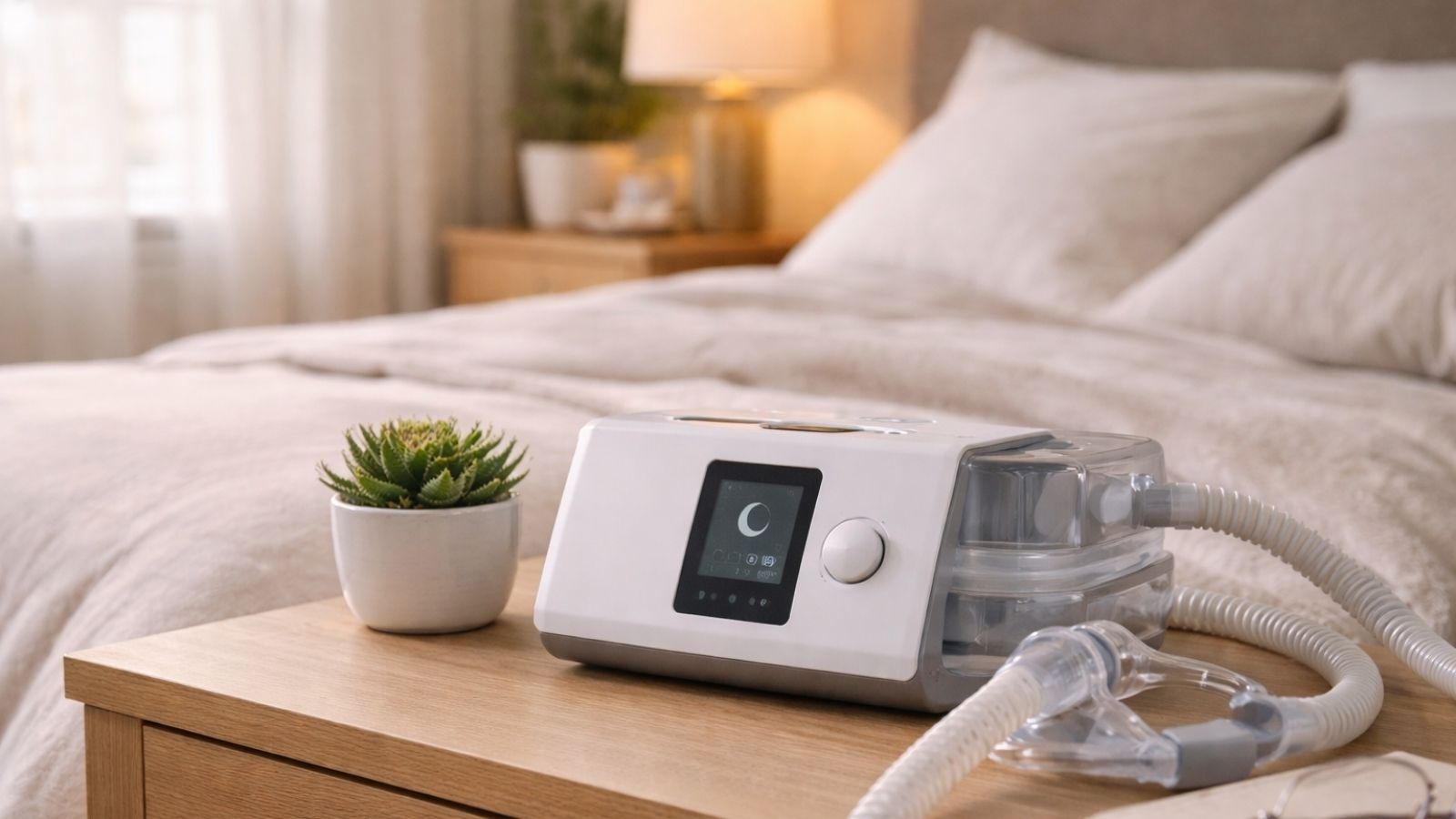
Treatment may include CPAP, APAP, oral appliance therapy, positional therapy, lifestyle changes, or other options. NHLBI describes treatment options including healthy lifestyle changes, positive airway pressure, oral devices, mouth and facial muscle therapy, and selected surgical procedures. (NHLBI)
The treatment decision depends on the type of sleep apnea, severity, oxygen levels, symptoms, anatomy, medical risks, and what you can realistically use consistently.
The goal is not just to stop snoring. The goal is to improve breathing, sleep quality, oxygen stability, daytime function, and long-term health risk.
The Bottom Line
Snoring is not always sleep apnea.
But loud, irregular, disruptive, or worsening snoring should be evaluated when it occurs with gasping, choking, breathing pauses, morning headaches, daytime fatigue, brain fog, or high blood pressure.
A sleep evaluation can help answer the question that over-the-counter snoring products cannot answer:
"Is this just noise, or is my breathing being disrupted while I sleep?"
If you are not sure, our practice can help you determine whether sleep testing is appropriate and what treatment options make sense if sleep apnea is found.
Meet Your Sleep Specialist
Dr. Bertrand R. Desilva, MD, FCCP, DABSM
Board-certified sleep medicine specialist with 35+ years of clinical experience. Education-first, patient-centered care that takes the time to get it right.
About Dr. Desilva