Oral Appliance vs. CPAP: How to Choose the Right Sleep Apnea Treatment
.jpg?dpl=dpl_2rbzr4Leuvt5PZSHajaHsnCjJENu) Dr. Bertrand R. DesilvaMD, FCCP, DABSM5 min read
Dr. Bertrand R. DesilvaMD, FCCP, DABSM5 min read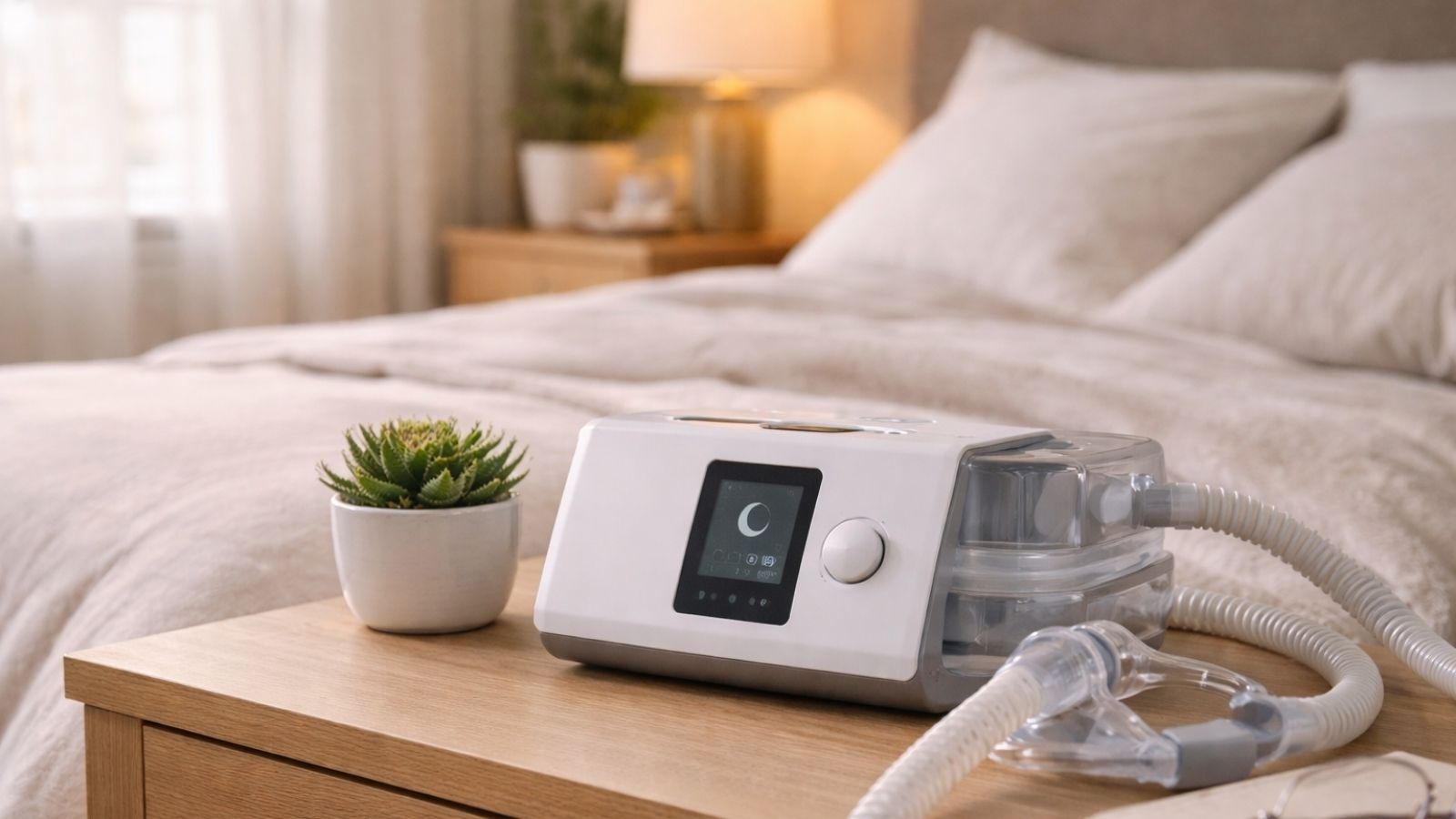
A common question after a sleep apnea diagnosis is:
"Do I really need CPAP, or can I use an oral appliance instead?"
The honest answer is: it depends.
CPAP and oral appliance therapy both have a role in treating obstructive sleep apnea. They work differently. CPAP uses pressurized air to help keep the airway open. Oral appliance therapy uses a custom-fitted dental device to reposition the lower jaw and reduce airway collapse.
The right treatment depends on your sleep apnea severity, anatomy, medical history, comfort, lifestyle, and what you can realistically use every night.
In our practice, we do not start with the assumption that one treatment is always best for everyone. We start with the diagnosis, the patient, and the evidence.
How CPAP Works
CPAP stands for continuous positive airway pressure. It delivers a steady stream of air through a mask, creating pressure that helps keep the airway open during sleep.
For many patients, especially those with moderate to severe obstructive sleep apnea, CPAP is often the most effective first-line treatment. NHLBI describes PAP therapy as a common treatment for sleep apnea and explains that CPAP provides constant air pressure to keep the airway open while a person sleeps. (NHLBI)
The advantage of CPAP is strength. When the mask fits properly, the settings are right, and the patient can use the machine consistently, CPAP can control obstructive events very effectively.
The disadvantage is usability. Some patients struggle with the mask, tubing, air pressure, dryness, leaks, travel inconvenience, noise, or claustrophobia.
That is why support matters. A patient who "failed CPAP" may not have actually failed CPAP. They may have failed a rushed setup, poor mask fitting, incorrect pressure settings, or inadequate follow-up.
How Oral Appliance Therapy Works
Oral appliance therapy uses a custom-fitted dental device, often called a mandibular advancement device. It is worn during sleep and gently moves the lower jaw forward. That forward position helps open the airway behind the tongue and reduce airway collapse.
In our oral appliance therapy process, we first evaluate sleep apnea severity, jaw health, and dental status to determine whether this approach is appropriate. When it is, we refer patients to a qualified dental sleep specialist for custom fitting, then continue to manage the sleep apnea medically with follow-up testing and treatment review.
NHLBI also explains that oral devices may be prescribed for patients who do not want to use or cannot tolerate CPAP and that these devices are custom fitted by a dental professional. (NHLBI)
The advantage is simplicity. No machine. No hose. No electricity. No mask. For frequent travelers or patients who cannot tolerate CPAP despite proper support, that can be meaningful.
The disadvantage is that oral appliances are not right for everyone.
Who May Be a Good Candidate?
Oral appliance therapy may be considered for patients with mild to moderate obstructive sleep apnea, patients who cannot tolerate CPAP despite proper support, frequent travelers, people with positional sleep apnea, and patients who prefer a non-machine-based treatment approach. Those are the same categories we use when evaluating whether oral appliance therapy may be reasonable.
However, oral appliance therapy requires appropriate dental and jaw health. It may cause jaw discomfort, bite changes, or tooth movement in some patients. It is generally less powerful than CPAP for severe sleep apnea. It is not appropriate for central sleep apnea.
That is why the decision should not be made from an advertisement, a friend's experience, or a simple preference alone. It should be made after reviewing the sleep study, symptoms, anatomy, and medical risk.
CPAP vs. Oral Appliance: The Real Question
The question is not simply, "Which treatment is better?"
A better question is:
"Which treatment is effective enough for my condition and realistic enough for me to use consistently?"
A highly effective treatment that sits unused does not help you. A comfortable treatment that does not adequately control your apnea may also be insufficient.
For some patients, CPAP is clearly the best option. For others, oral appliance therapy is a reasonable alternative. Some patients may need combination therapy. Others may need positional therapy, lifestyle changes, surgical evaluation, or treatment adjustments over time.
There is no one-size-fits-all answer.
Why Follow-Up Testing Matters
This is one of the most important points patients miss.
You cannot assume an oral appliance is working just because it feels comfortable or reduces snoring. Snoring can improve while sleep apnea remains undertreated.
In our process, after the oral appliance is fitted and the patient has adjusted to it, we order follow-up sleep testing to confirm whether the device is effectively treating the apnea.
That step is not optional in good sleep medicine. Treatment needs to be verified.
If the oral appliance reduces breathing events, improves oxygen levels, and improves symptoms, that is useful information. If it does not, the appliance may need further adjustment or a different treatment approach may be needed.
Why Medical Oversight Still Matters
An oral appliance is made by a dental professional, but sleep apnea is a medical condition.
That means the sleep physician still plays a central role: diagnosing the condition, determining whether oral appliance therapy is appropriate, ordering follow-up testing, interpreting results, and coordinating care with the dental provider.
Our role is to make sure the treatment is not only comfortable, but medically effective.
The Bottom Line
CPAP and oral appliance therapy both have a place in sleep apnea care.
CPAP is often the most powerful option, especially for moderate to severe sleep apnea. Oral appliances can be a strong alternative for selected patients, especially those with mild to moderate obstructive sleep apnea or true CPAP intolerance.
The key is not guessing. The key is proper diagnosis, honest discussion, expert fitting, and follow-up testing.
If you are wondering whether CPAP is your only option, we can review your sleep study, symptoms, medical history, and treatment experience to help determine which options are medically reasonable.
Meet Your Sleep Specialist
Dr. Bertrand R. Desilva, MD, FCCP, DABSM
Board-certified sleep medicine specialist with 35+ years of clinical experience. Education-first, patient-centered care that takes the time to get it right.
About Dr. Desilva