What to Expect From a Telehealth Sleep Consultation
.jpg?dpl=dpl_2rbzr4Leuvt5PZSHajaHsnCjJENu) Dr. Bertrand R. DesilvaMD, FCCP, DABSM4 min read
Dr. Bertrand R. DesilvaMD, FCCP, DABSM4 min read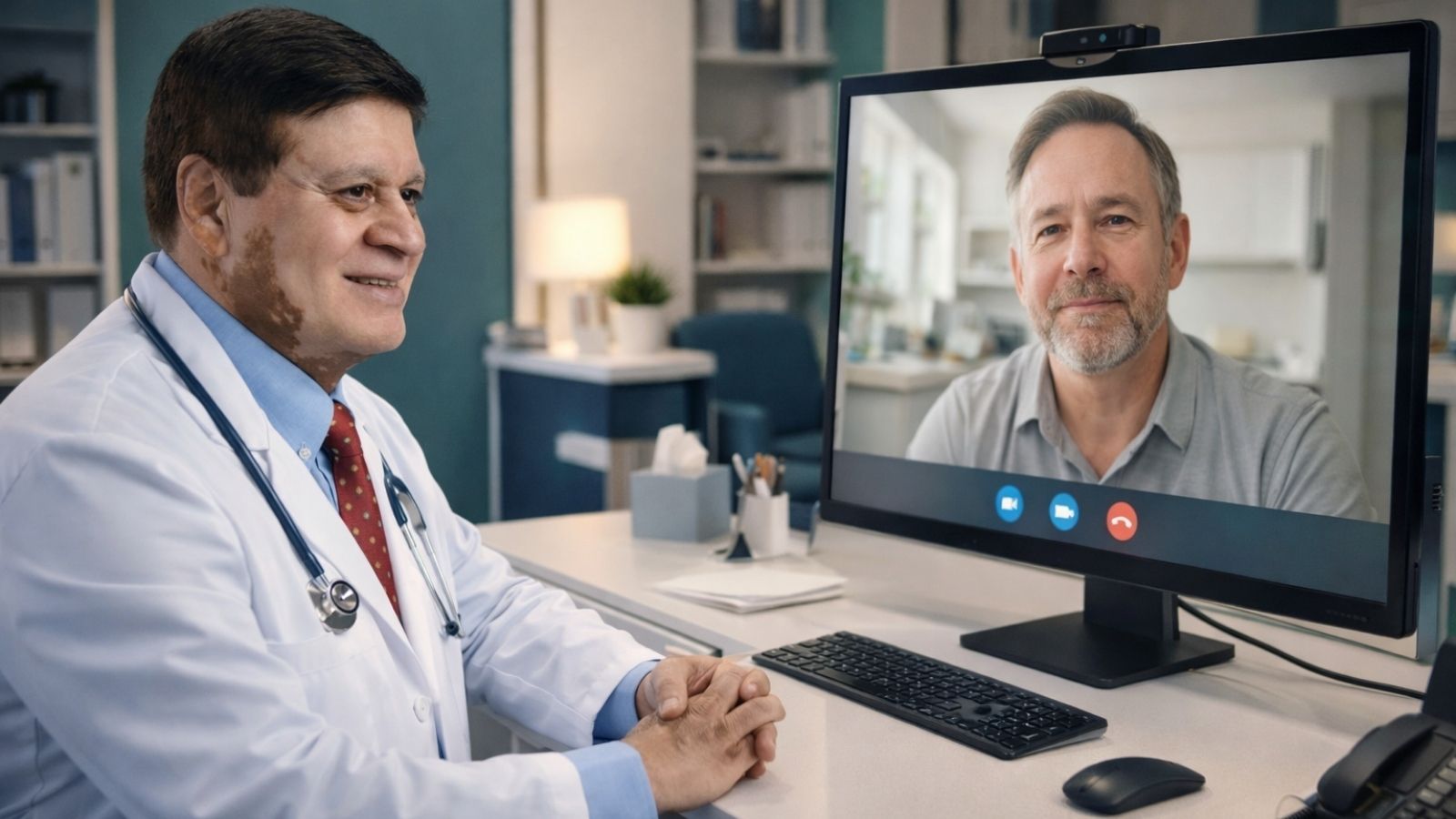
If you've never had a telehealth appointment — or never seen a sleep specialist — the process might feel unfamiliar. Here's what to expect when you schedule a virtual consultation with a sleep medicine provider.
Before Your Appointment
Booking Most telehealth practices offer online scheduling. You'll select an appointment time, provide basic information, and complete intake forms before your visit. These forms typically ask about:
- Your sleep history and current concerns
- Medical conditions and medications
- Your sleep schedule and habits
- Symptoms you've noticed (or that others have noticed)
Technical Setup You'll need: - A device with a camera and microphone (smartphone, tablet, or computer) - A stable internet connection - A quiet, private space - Good lighting so your provider can see you clearly
That's it. No special software or equipment in most cases — just a video link sent to you before the appointment.
During Your Appointment
The Consultation (30–60 minutes) A thorough sleep medicine consultation isn't rushed. Expect your provider to:
Listen to your story. This is the most important part. When did your symptoms start? What does a typical night look like? How do you feel during the day? What have you already tried?
Review your medical history. Sleep apnea interacts with many other conditions — hypertension, diabetes, heart disease, mood disorders. Your provider needs the full picture.
Assess your risk factors. This includes not just weight and neck circumference (which you can measure at home), but also facial anatomy, nasal congestion, family history, and hormonal status.
Ask about your bed partner's observations. Snoring, gasping, and breathing pauses are often noticed by someone else first.
Discuss next steps. Based on the consultation, your provider may recommend: - A home sleep test (shipped to your door) - An in-lab sleep study (if the clinical picture is complex) - Additional evaluations if needed
What You'll Come Away With By the end of the visit, you should have: - A clear understanding of whether a sleep evaluation is appropriate - A plan for next steps (testing, referrals, or follow-up) - Answers to your questions
After Your Appointment
If a Home Sleep Test Is Ordered A compact testing device will be shipped to your home. You'll wear it for one or two nights while sleeping in your own bed. It typically measures: - Airflow through your nose - Blood oxygen levels - Chest and abdominal movement - Body position
The setup is straightforward — most patients manage it easily with written or video instructions.
Results and Follow-Up Once your results are interpreted, you'll have a follow-up appointment (also available via telehealth) to discuss: - Whether you have sleep apnea and how severe it is - What your treatment options are - Which approach makes the most sense for your situation
Why Telehealth Works for Sleep Medicine
Sleep medicine is particularly well-suited to telehealth because: - Initial consultations are conversation-based, not procedure-based - Sleep tests can be done at home - Follow-up appointments focus on discussing results and adjusting treatment - Patients sleep in their own environments, which often produces more accurate data than a sleep lab
For many patients, telehealth removes barriers — no commute, no time off work, no waiting rooms. The quality of care isn't compromised; only the convenience improves.
Is It Right for You?
If you're experiencing persistent fatigue, disruptive snoring, or any of the symptoms associated with sleep disorders, a telehealth consultation is a reasonable first step. You'll get the same thorough evaluation you'd receive in person, with the added convenience of doing it from home.
Dr. Desilva offers telehealth sleep consultations for patients throughout California. Same-week appointments are often available.
Meet Your Sleep Specialist
Dr. Bertrand R. Desilva, MD, FCCP, DABSM
Board-certified sleep medicine specialist with 35+ years of clinical experience. Education-first, patient-centered care that takes the time to get it right.
About Dr. Desilva