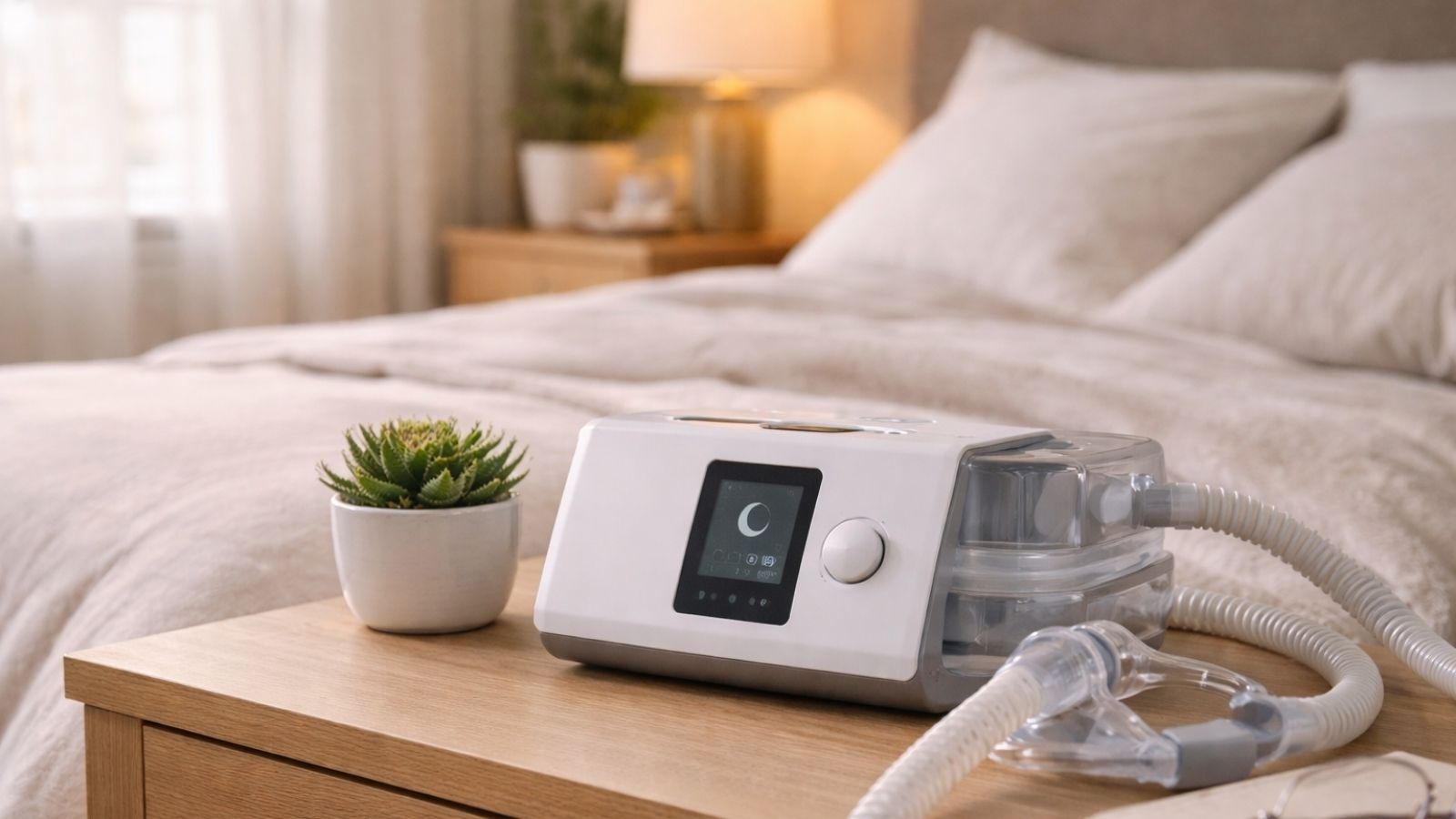
Why Women's Sleep Apnea Gets Overlooked
.jpg?dpl=dpl_2rbzr4Leuvt5PZSHajaHsnCjJENu) Dr. Bertrand R. DesilvaMD, FCCP, DABSM7 min read
Dr. Bertrand R. DesilvaMD, FCCP, DABSM7 min read
For decades, sleep apnea has been framed as a condition that primarily affects overweight older men. The research was conducted mostly on men. The screening tools were developed based on male symptom profiles. And the diagnostic criteria were calibrated to detect the way sleep apnea typically presents in men.
The result? Women with sleep apnea get missed — consistently and systematically.
A Different Symptom Profile
When men have sleep apnea, the classic presentation is hard to miss: loud snoring, witnessed breathing pauses, and excessive daytime sleepiness. These are the symptoms that screening tools like the STOP-BANG questionnaire are designed to catch.
Women often present differently:
| How Men Typically Present | How Women Typically Present |
|---|---|
| Loud snoring | Insomnia or difficulty staying asleep |
| Witnessed apneas (partner reports) | Fatigue and low energy |
| Excessive daytime sleepiness | Mood disturbances |
| Morning headaches | Anxiety or depression |
A woman who tells her doctor she's exhausted, anxious, and can't sleep well is likely to be evaluated for depression, anxiety disorder, or hormonal changes — not sleep apnea. The condition doesn't even enter the differential diagnosis.
The Menopause Connection
This is where the data becomes striking. Research shows that 47–67% of postmenopausal women have obstructive sleep apnea. That's not a small minority — it's potentially the majority.
Here's why:
Estrogen and progesterone are protective. Before menopause, these hormones help maintain airway muscle tone and influence breathing regulation. As hormone levels decline during perimenopause and menopause, that protection decreases.
Fat redistribution matters. Menopause often shifts fat distribution toward the neck, abdomen, and upper airway, all of which can contribute to airway narrowing.
Symptom overlap creates confusion. Hot flashes, night sweats, insomnia, fatigue, mood changes — these are common experiences during menopause. They're also common symptoms of sleep apnea. When everything gets attributed to "menopause," sleep apnea hides in plain sight.
The Misdiagnosis Problem
Women with undiagnosed sleep apnea commonly receive other diagnoses first:
- Depression — fatigue, low mood, and cognitive difficulties can all stem from disrupted sleep
- Anxiety — nighttime awakenings and a racing heart (from apnea events) mimic anxiety symptoms
- Chronic fatigue syndrome — unexplained, persistent exhaustion
- Hypothyroidism — fatigue and weight gain overlap
- Insomnia — women with sleep apnea often report difficulty staying asleep, which gets coded as insomnia
These conditions can certainly coexist with sleep apnea. But when sleep apnea is the underlying cause — or a major contributing factor — treating only the surface symptoms doesn't resolve the problem.
Why Screening Tools Fall Short
The most widely used screening tool, the STOP-BANG questionnaire, asks about Snoring, Tiredness, Observed apneas, blood Pressure, BMI, Age, Neck circumference, and Gender. Several of these criteria are weighted toward male presentation:
- Snoring: Women with sleep apnea are less likely to report loud snoring
- Observed apneas: Single women have no bed partner to observe
- BMI/Neck circumference: Women can develop sleep apnea at lower BMI and smaller neck sizes
- Gender: Being male adds a point; being female does not
A woman can have significant sleep apnea and score as "low risk" on these tools.
What Women Can Do
- Trust your symptoms. If you're experiencing persistent fatigue, unrefreshing sleep, brain fog, or mood changes that don't resolve with standard treatments, sleep apnea deserves consideration.
- Ask specifically. If your healthcare provider doesn't mention sleep apnea, bring it up. Ask whether a sleep evaluation might be appropriate.
- Seek a specialist. Primary care providers may not be attuned to atypical sleep apnea presentations. A board-certified sleep medicine specialist is more likely to consider the full picture.
- Don't accept "it's just hormones" without investigation. Hormonal changes are real and significant. But they can also mask other conditions that need attention.
Moving Forward
Awareness is the first step. The more women know that sleep apnea can present as insomnia, fatigue, anxiety, and depression — rather than just loud snoring — the more likely they are to pursue evaluation.
Sleep apnea is treatable. Diagnosis changes the trajectory. And no one should spend years being treated for the wrong condition because the right one wasn't considered.
Dr. Desilva has particular expertise in evaluating women for sleep apnea, including those whose symptoms don't fit the traditional profile. Telehealth consultations are available for patients throughout California.
Meet Your Sleep Specialist
Dr. Bertrand R. Desilva, MD, FCCP, DABSM
Board-certified sleep medicine specialist with 35+ years of clinical experience. Education-first, patient-centered care that takes the time to get it right.
About Dr. Desilva